For clients
Python Backend Development
APIs and server-side logic in Python, built around your data and the systems you already use.
What this covers
- REST APIs for web and mobile clients, internal tools and other services.
- Business logic and validation that keep data consistent.
- Database design and access with PostgreSQL.
- Integrations with external APIs and webhooks.
- Background processing for work that should not block a request.
How I approach it
- Framework by fit: FastAPI for typed, asynchronous API services; Django when an application benefits from its ORM, migrations and admin; Flask for small services and integration layers.
- Contracts first: request and response schemas are defined up front, so invalid input is rejected with a clear, per-field error.
- Slow work leaves the request: tasks go to a queue and the API answers at once.
- Failure handling is designed in: timeouts, clear error responses and logs that explain what happened.
What you get
A working backend with an API description your team can build against, the code in your repository, and an explanation of how the parts fit together.
Technologies
- Python
- FastAPI
- Django
- Flask
- PostgreSQL
- Redis
- REST API
Related case studies
Case studies with this kind of work — each with an interactive model of the system.
Case 06 · Full-Stack Development / Commercial Web
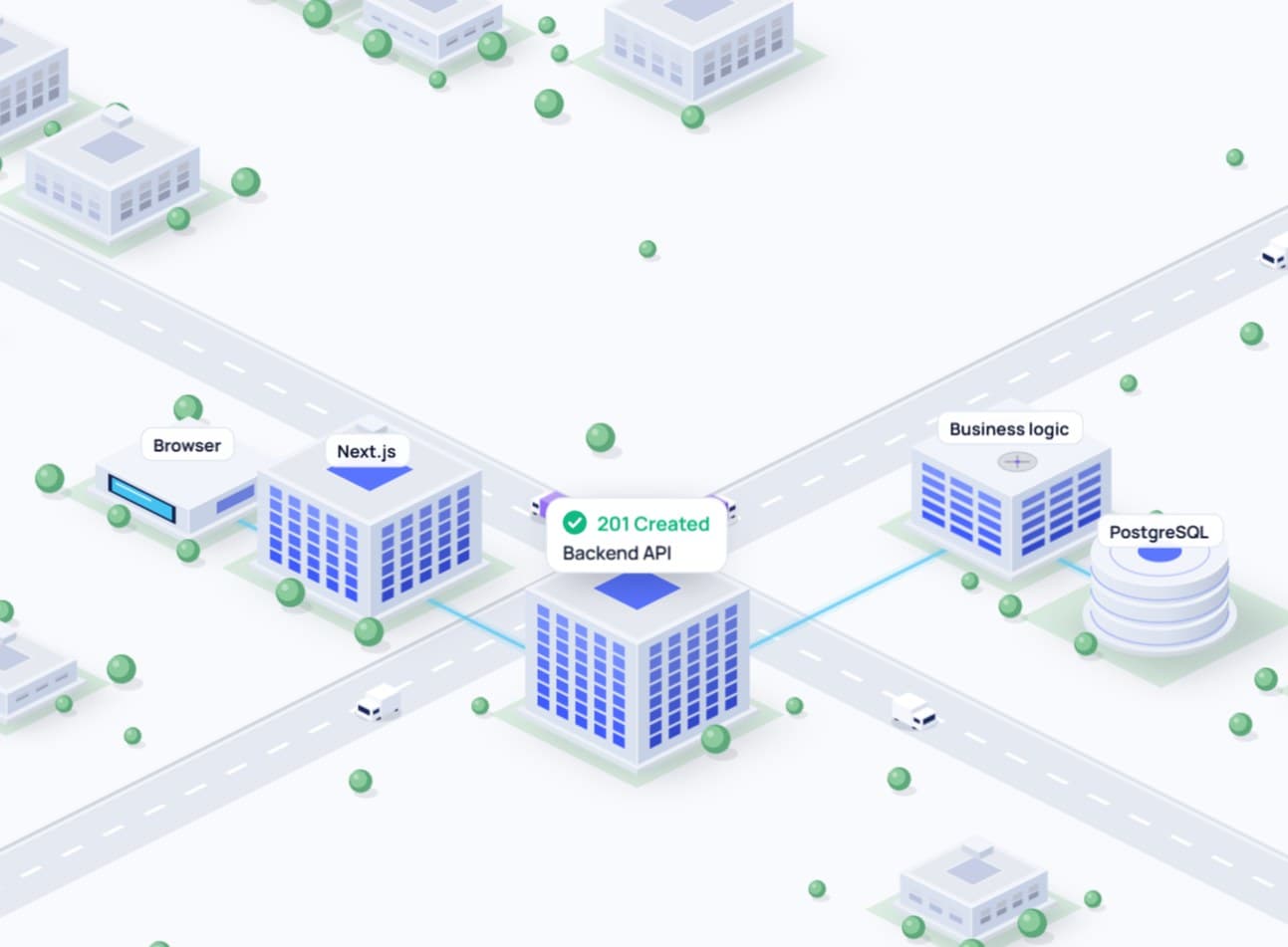
Full-Stack Web Applications
Complete web applications and websites built to order
Client web solutions end to end: the interface, server-side logic, integrations and the database — a finished product rather than a standalone API.
React · Next.js · Python · Django · FastAPI · Flask · PostgreSQL
Open the caseCase 05 · Distributed Systems / Backend Architecture
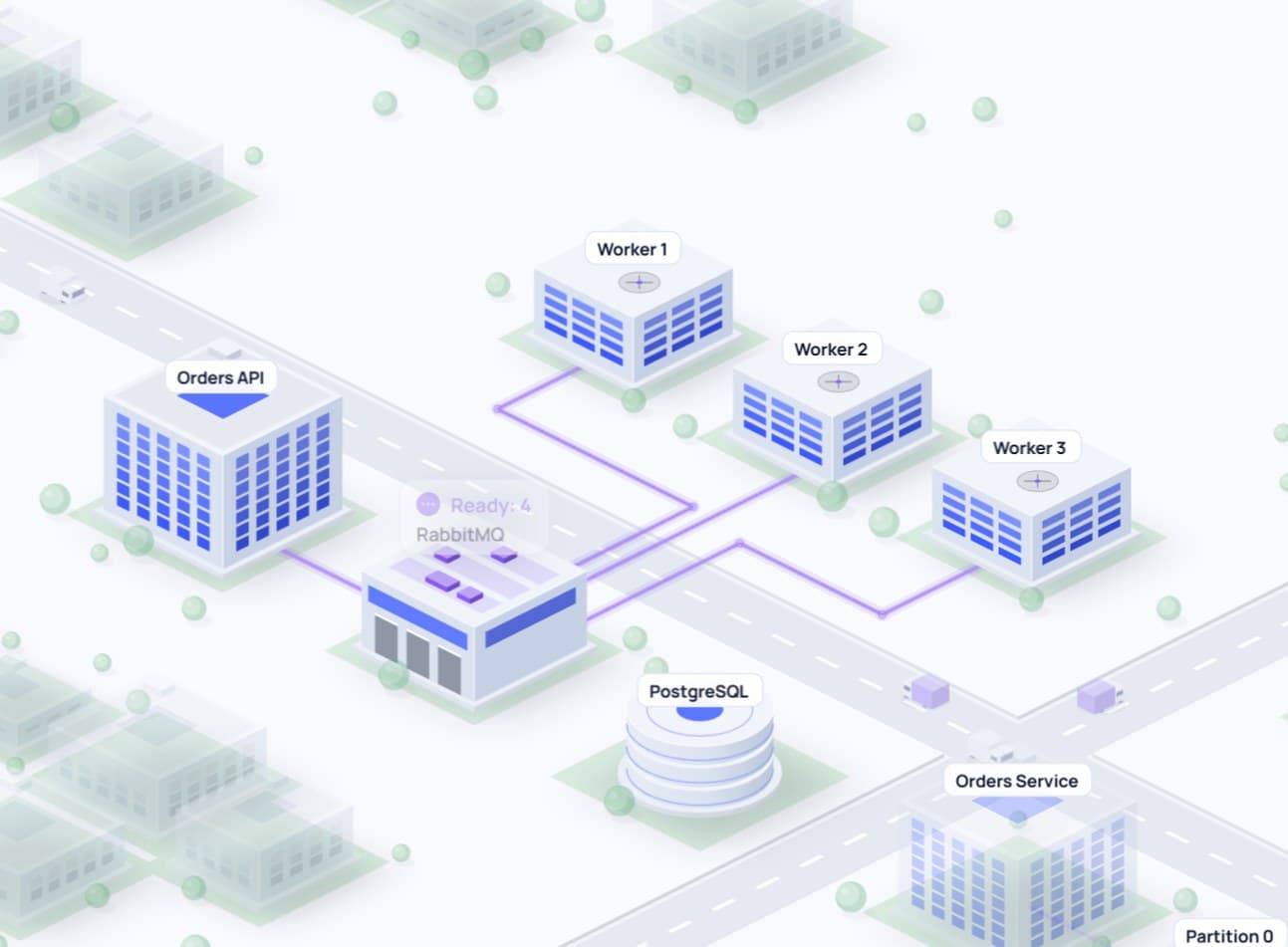
Event-Driven Backend Architecture
Asynchronous event processing and service-to-service communication
Server-side architectures where components talk through message brokers and work is done asynchronously, by background handlers and event consumers, rather than inside one HTTP request.
Python · FastAPI · RabbitMQ · Apache Kafka · Redis · PostgreSQL
Open the caseCase 03 · Backend / Automation / Systems Integration
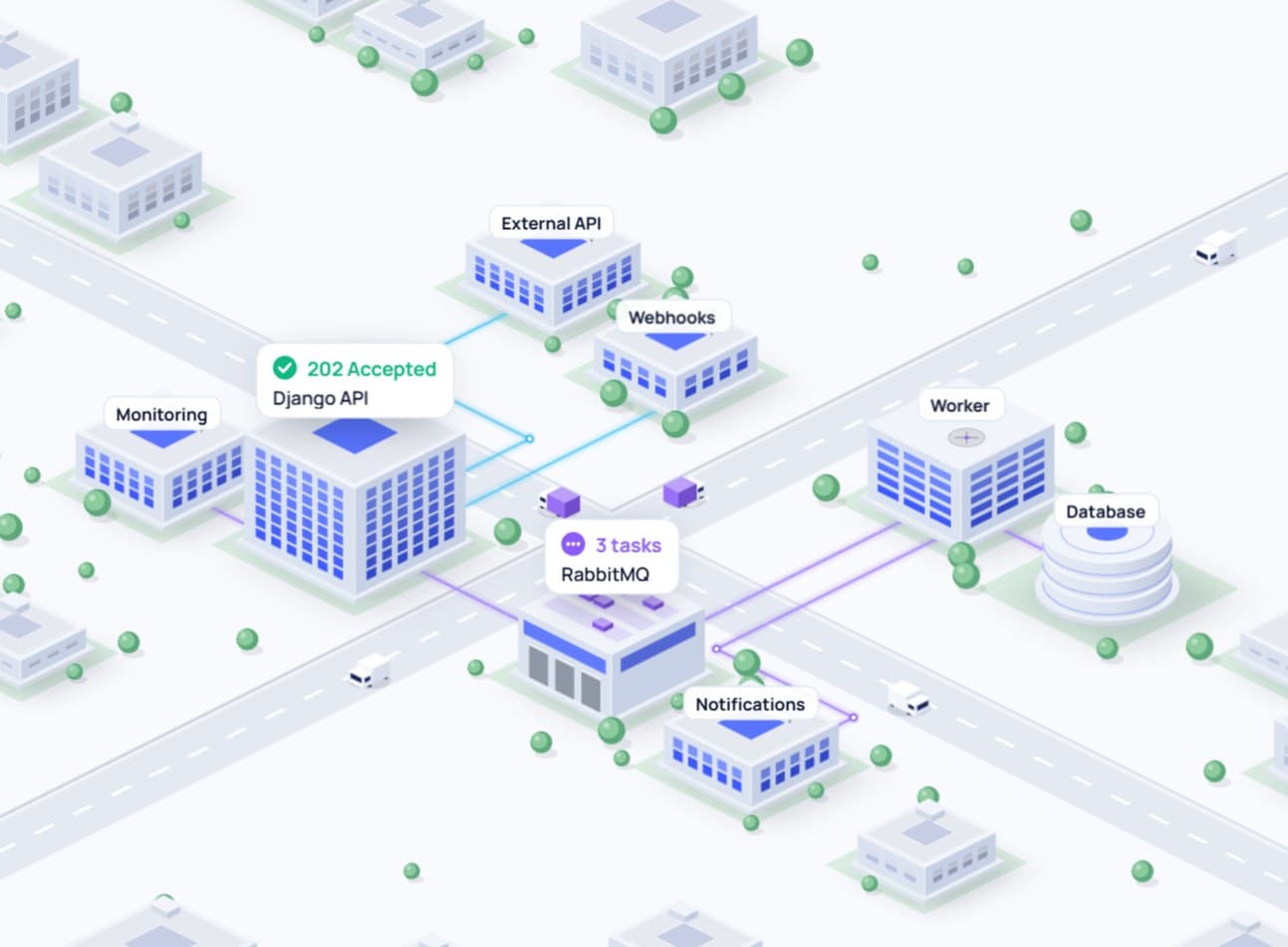
Business Process Automation
A platform for business process automation and integrations
Software that removes manual work: it takes data from several sources, checks and processes it, runs tasks and hands the results to other services.
Python · Django · RabbitMQ · REST API
Open the case
How I work
Every project goes through the same steps. Scope, timing and cost are agreed after discovery, when the problem is clear. The contract and invoices go through my individual entrepreneurship registered in Armenia.
- 01
Discovery
We clarify the problem, the people who will use the result, the data and the systems involved.
- 02
Solution design
I propose an architecture and the scope of a first working version, and we agree on it before building.
- 03
Development
The system is built in small steps you can see and comment on.
- 04
Validation
Each part is checked with tests, real runs and a look at the edge cases.
- 05
Delivery
The result goes into your repository and environment, with an explanation of how it works.
Questions
FastAPI, Django or Flask — which one?
It depends on the project. FastAPI suits typed, asynchronous API services; Django suits applications that benefit from its ORM, migrations and admin; Flask suits small services and integration layers. The choice comes from your requirements.
Can you work on an existing codebase?
Yes. The first step is reading the current code and architecture, so changes fit what is already there.
What do you need to start a conversation?
A short description of the problem, the systems involved and any constraints you know about. The first conversation is for clarifying the scope.
Have a system to build?
Describe the problem in a few sentences. I'll reply with questions and a proposed approach.