For clients
RAG & LLM Application Development
Question answering and search over your own documents, built so that answers come from your sources — and the system says so when the sources have no answer.
What this covers
- Question answering over internal documents and knowledge bases.
- Semantic search across documents and records.
- LLM features inside existing products and bots.
- Pipelines that process and index documents with their metadata.
How a RAG system is built
- Documents are cleaned and split into fragments sized for meaning, with overlap so an idea is not cut in half.
- Fragments and questions become vectors in the same space; search finds the closest by similarity.
- A relevance threshold decides what enters the context — low similarity is a sign that the answer is not in the sources.
- The model answers from the retrieved fragments and cites them, so every answer can be checked.
- Repeated questions can be served from a cache instead of running search and generation again.
pgvector or Milvus
pgvector keeps vectors next to relational data in PostgreSQL, so vector search combines with ordinary SQL filters and transactions. Milvus is a dedicated vector database with indexes for approximate search over large collections. The right choice depends on where your data lives and how large the collection is.
Technologies
- Python
- FastAPI
- pgvector
- Milvus
- Redis
- LLM APIs
Related case studies
Case studies with this kind of work — each with an interactive model of the system.
Case 01 · AI Engineering / Backend / Vector Search
Intelligent Knowledge Base
A RAG system for searching corporate knowledge
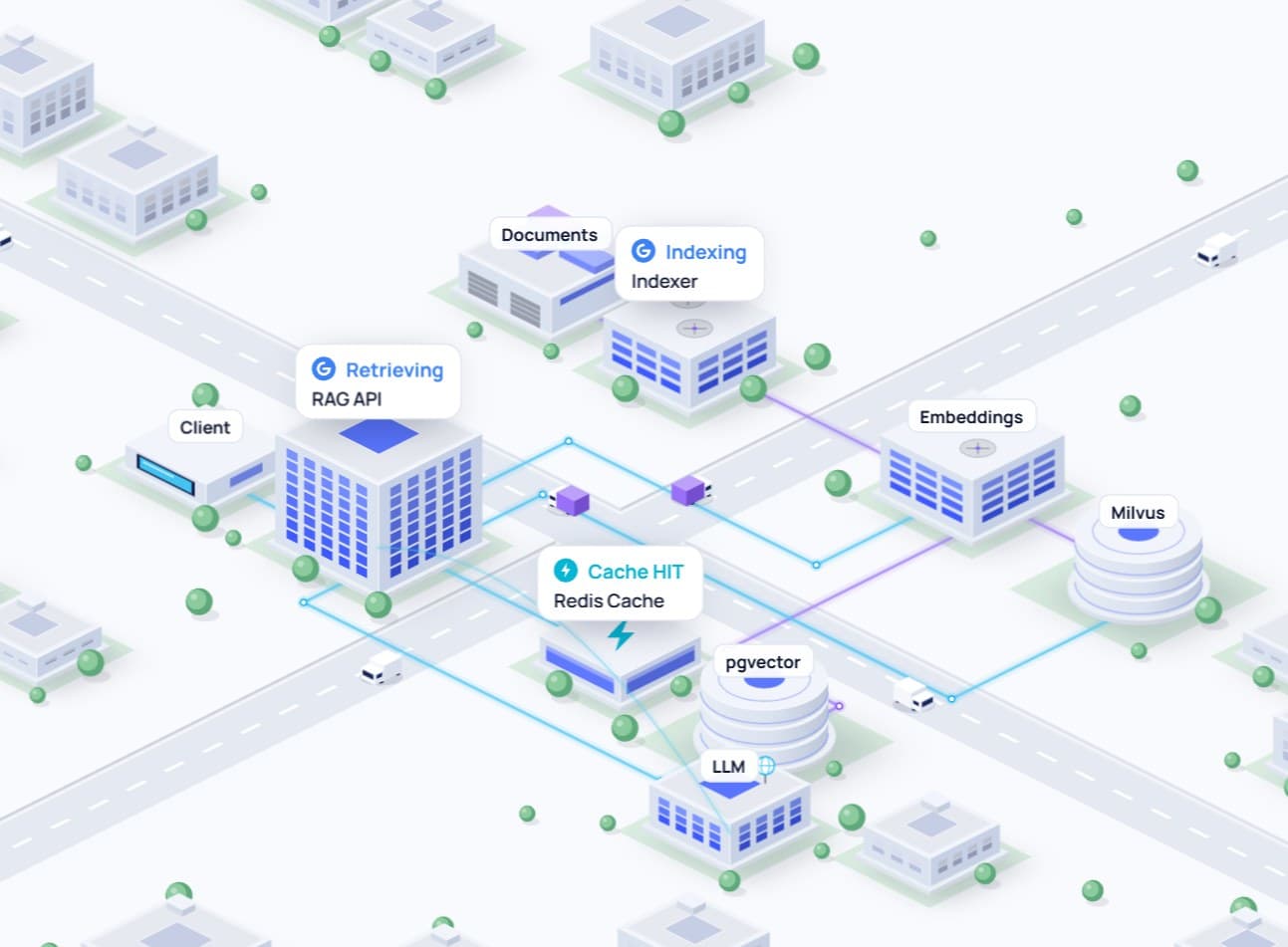
The system answers natural-language questions from an organisation's internal documents: it finds relevant fragments with vector search and hands them to a language model as context.
Python · FastAPI · PostgreSQL + pgvector · Milvus · Redis · LLM API
Open the caseCase 08 · Automation / Backend / Integrations
Bots & API Integrations
Smart bots and automated services
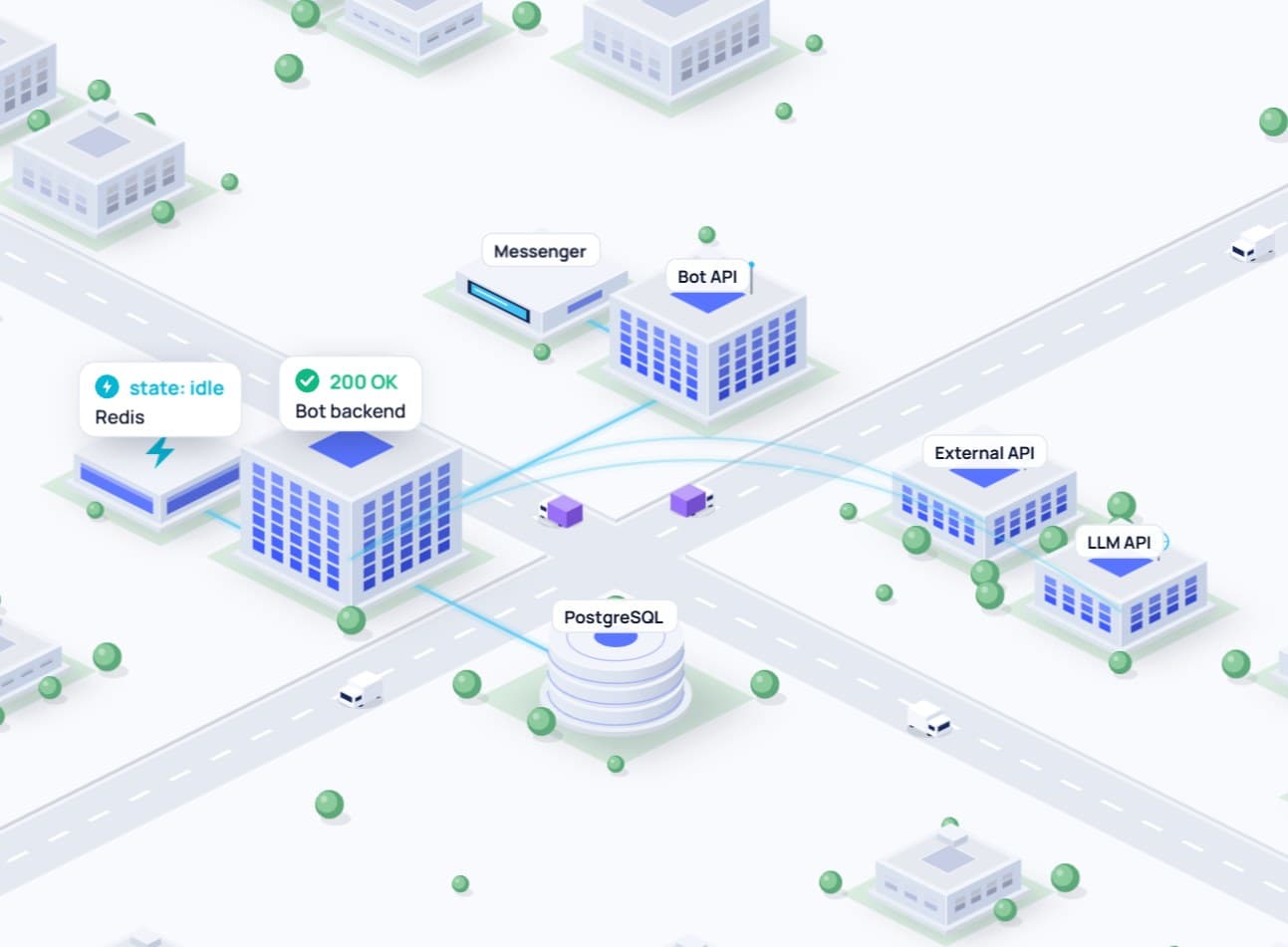
Bots and automated programs that talk to users, external APIs and internal systems. A bot here is not a message window but a software system with business logic, state and integrations.
Python · Flask · REST API · PostgreSQL · Redis · LLM API
Open the caseCase 07 · Cloud / Database Engineering / Backend
Cloud & Data Infrastructure
Cloud infrastructure and data storage systems
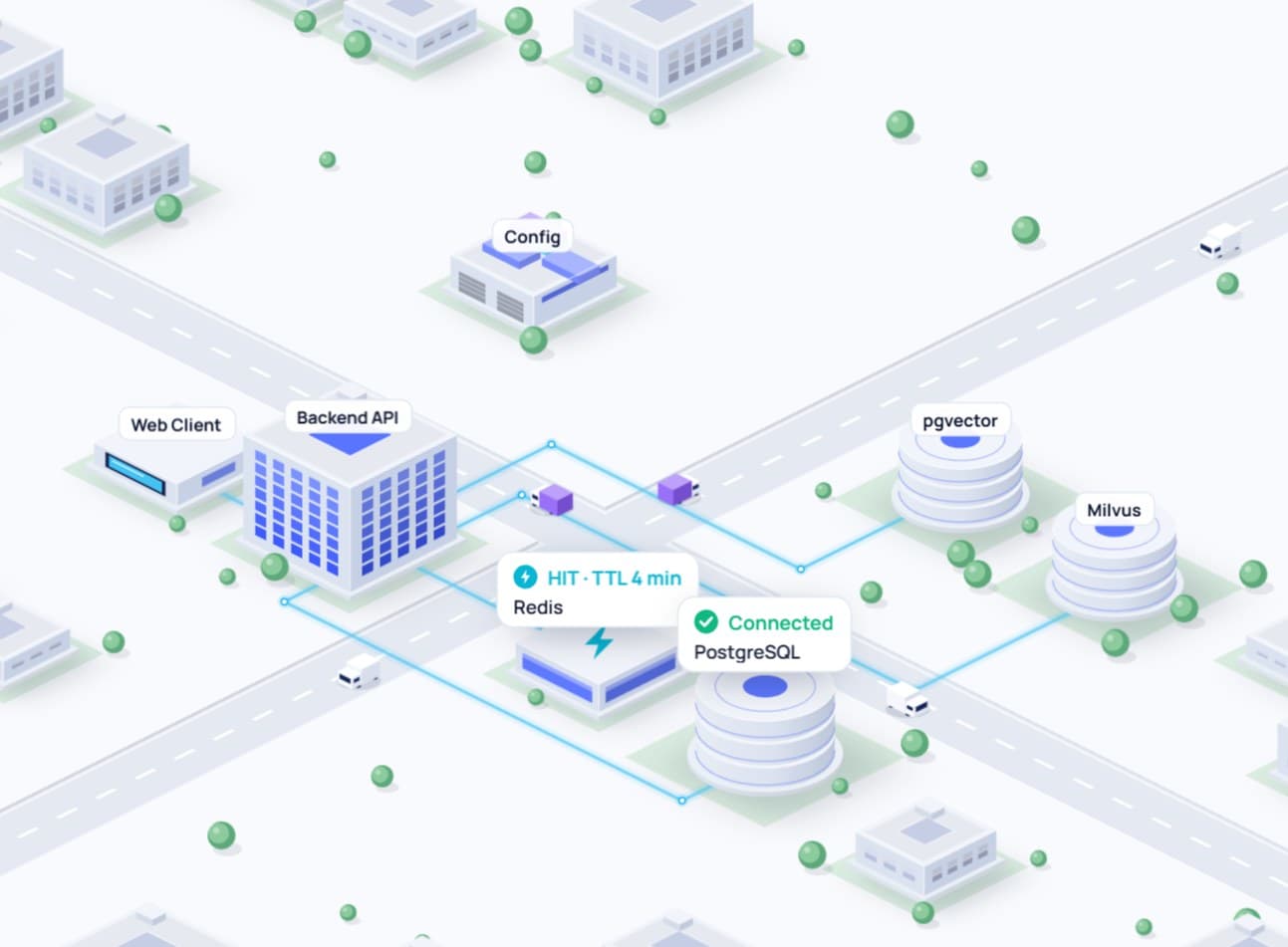
Working with cloud databases and storage: data structure, connecting backend applications, relational data, vector search and caching — each in the store that fits it.
Python · PostgreSQL · Redis · pgvector · Milvus · Cloud databases
Open the case
How I work
Every project goes through the same steps. Scope, timing and cost are agreed after discovery, when the problem is clear. The contract and invoices go through my individual entrepreneurship registered in Armenia.
- 01
Discovery
We clarify the problem, the people who will use the result, the data and the systems involved.
- 02
Solution design
I propose an architecture and the scope of a first working version, and we agree on it before building.
- 03
Development
The system is built in small steps you can see and comment on.
- 04
Validation
Each part is checked with tests, real runs and a look at the edge cases.
- 05
Delivery
The result goes into your repository and environment, with an explanation of how it works.
Questions
Will the system make things up?
Retrieval reduces that risk: answers come from retrieved sources, cite them, and the system declines when nothing relevant is found. No language model is free of errors, which is why every answer stays checkable against its sources.
Can it answer from our own documents only?
Yes — that is the point of retrieval. The context comes from the documents you index, not from the model's general knowledge.
Which LLM provider would it use?
The retrieval pipeline does not depend on one provider. The choice follows your requirements for answer quality, cost and how your data may be handled.
Have a system to build?
Describe the problem in a few sentences. I'll reply with questions and a proposed approach.